
Third Installment of Live Rattlesnake Camera in Pennsylvania Allows YouTube Viewers to Observe Timber Rattlesnakes Around the Clock

Contact: Scott Boback, bobacks@dickinson.edu, 717-713-1319
Emily Taylor, etaylor@calpoly.edu, 805-440-6288
Project RattleCam’s latest livestream is up and running as part of a community science collaboration between Cal Poly and Dickinson College
SAN LUIS OBISPO, California — A new platform has arrived to observe timber rattlesnakes in nature from the comfort of home thanks to a partnership between Cal Poly and a Pennsylvania college chartered in 1783.
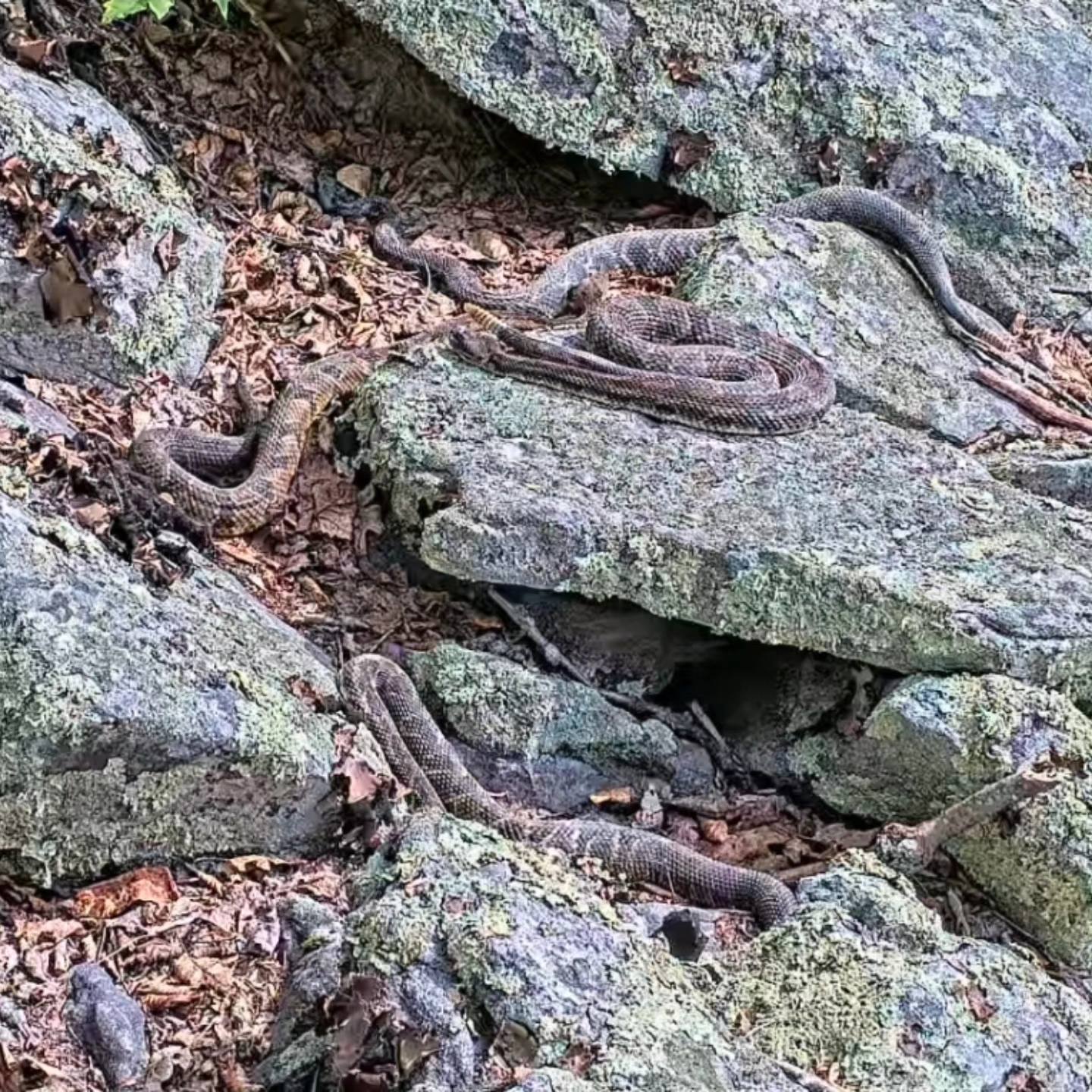
Project RattleCam recently launched its third livestream installation at an undisclosed, remote location in Pennsylvania on May 18. The new channel, now live through early fall, operates 24 hours a day, with night-vision cameras capable of capturing the activities of snakes and other creatures that enter into the frame of the camera lens after dark, such as rodents and weasels.
The community science project is a partnership between Cal Poly and Dickinson College based in Carlisle, located about a half-hour southwest of Harrisburg, Pennsylvania’s capital, and can be accessed free on YouTube as part of Project RattleCam. The launch adds a new location to complement ongoing, highly popular livestreams from Colorado, made public three years ago, and from California, the first to be released six years ago.
Scott Boback, a Dickinson biology professor and co-director of Project RattleCam

“Like the other livestreaming cameras within Project RattleCam, the Pennsylvania camera provides scientists and the general public a unique window into the ecology and behavior of this secretive species,” said Scott Boback, a Dickinson biology professor and co-director of Project RattleCam. “The timber rattlesnake exhibits several features that make it unique among snakes generally and rattlesnakes in particular. It possesses one of the largest geographic ranges, extending into northern latitudes, and is probably one of the top five largest rattlesnake species in the world."
The timber rattlesnake, native to the Eastern U.S., is listed as endangered and threatened in 12 of 30 states it occupies. This North American pit viper is locally extinct in three states: Maine, Delaware, and Rhode Island. The species typically inhabits forests in rugged terrain.
Timber rattlesnakes are venomous but known to be highly docile creatures and prefer to avoid confrontation, typically striking only in self-defense. The species was the first rattlesnake encountered by European settlers upon their arrival in the U.S.
“Although we know a great deal about certain aspects of timber rattlesnake biology, we are still discovering novel behaviors,” Boback said. “Just last year, researchers described a potentially new form of communication in timber rattlesnakes that includes rapid, tactile head vibrations between individuals."
The Snake Channel
Steadily growing its audience, Project RattleCam now has more than 24,000 subscribers and over 5 million views across its channels.
The idea behind the initiative is to encourage education about rattlesnake behaviors, discourage harm to the species and foster dialogue about the reptiles. Rattlesnakes are an important part of the ecosystem, helping to reduce disease and control rodent populations. And their venom has helped produce medications, including anti-clotting drugs that prevent heart attacks.
Project RattleCam live chats, monitored by the faculty researchers, students and volunteer community scientists, allow the public to share ideas, address questions and even identify snakes and assign them monikers such as “Scar,” the first to be named in Pennsylvania.

“The public can help us collect data,” said Emily Taylor, a Cal Poly biological sciences professor and co-director of Project RattleCam. “In fact, we have science journal article publications coming out soon that are co-authored by some viewers who helped us as community scientists. It’s really important to me that people know that this isn’t just a camera. This is a community science project where people can act as researchers from their own homes.”
And as part of an ongoing education campaign, children are learning about snakes through the project’s RattlEd program, which provides curriculum-based materials for third- through fifth-grade teachers to use in their classrooms. The instructional resources, which incorporate the Project RattleCam livestreams, are available to anyone, and the curriculum aligns with Next Generation Science Standards that focus on hands-on learning, critical thinking and understanding how scientific concepts connect to the real world.
Reversing Misconceptions
Researchers have expressed concern about misconceptions some people hold about rattlesnakes and warn against harming any snake, which also can increase the likelihood of injury or death for a person. Taylor recommends that anyone who encounters a rattlesnake in residential areas contact a local snake-relocation expert or visit the site at freesnakerelocation.com.
“By allowing people to watch their natural behavior from the comfort of their own homes, we can dispel some of these myths,” Taylor said. “Our previous research from our Colorado cam showed that watching rattlesnakes engaging in normal behaviors can change people’s minds about them and cause people to become more comfortable around them, and that’s our goal.”
To learn more about Project RattleCam, visit: rattlecam.org.
The following video links from the Pennsylvania livestream are available for media use (credit Project RattleCam):
-
Four Timber Rattlesnakes on the Debut LiveCam
https://www.youtube.com/watch?v=gLK--pwCSpw
-
First glimpse of the Timber Rattlesnake LiveCam
https://www.youtube.com/watch?v=lQOOjiSjc0k
-
Male and Female Timber Rattlesnake check each other out
https://www.youtube.com/watch?v=SHLPB_DS7Uo&t=30s
-
Thirsty Timber Rattlesnake drinks rainwater
https://www.youtube.com/watch?v=809QbuXkGh4
Top Photo: Timber rattlesnakes bask at a communal gestation site at an undisclosed area of Pennsylvania where a new live-streaming camera has made its debut.
Photo courtesy Project RattleCam, RattleCam.org
